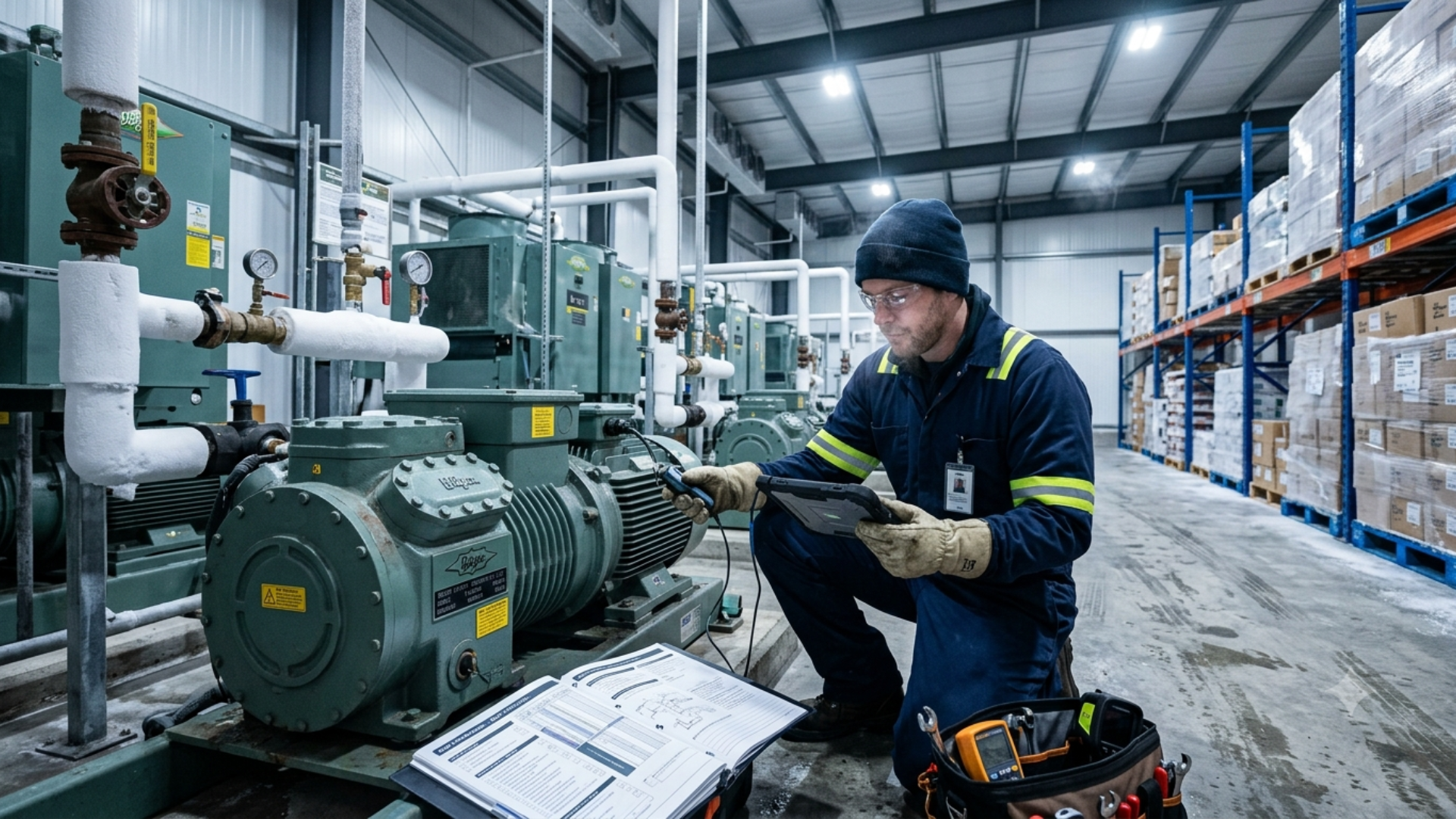
What Is Reliability Centered Maintenance (RCM)? A Complete Guide for Cold Room Systems
Reliability Centered Maintenance (RCM) is a structured framework that identifies the most suitable and effective maintenance strategy for each asset depending on its failure risks. Instead of applying a solution that fits all conditions, RCM focuses on using the right maintenance approach to assess each asset’s actual risk profile. This helps achieve lower maintenance costs, higher equipment costs, and an improvement in operational safety. While discussing RCM, it is also important to talk about Total Productive Maintenance (TPM), which refers to complementary strategies that are used to optimise equipment performance, but with different approaches. The main difference is that while RCM prioritises analysing critical assets to eliminate risks, TPM focuses on improving overall equipment effectiveness. This blog further discusses RCM and its relevance in cold rooms. So, let’s dig in.
What is Reliability Centered Maintenance and Why Does it Matter for Cold Rooms?
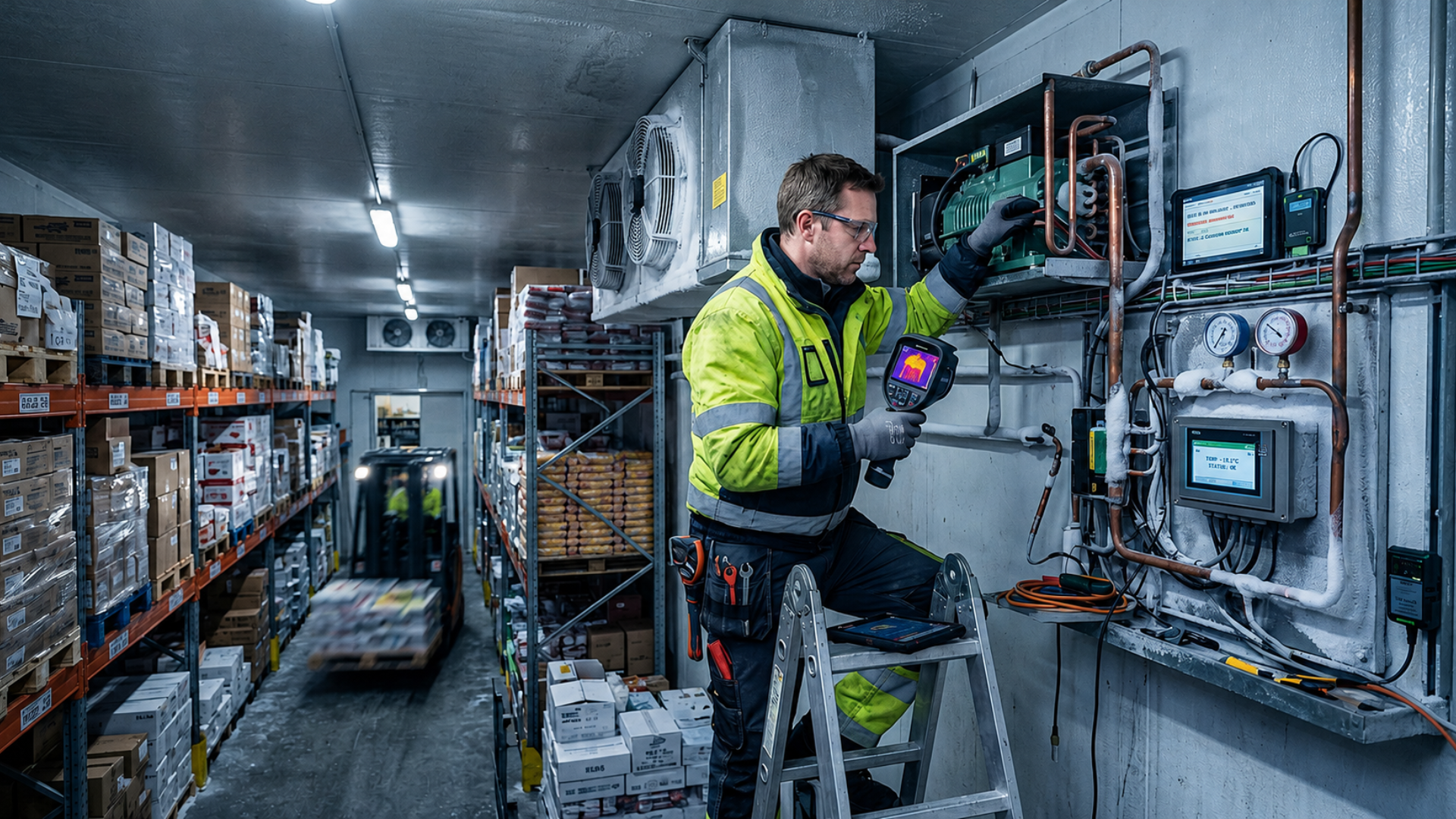
For cold room systems, Reliability Centered Maintenance helps optimize refrigeration, insulation, and controls to ensure maximum uptime and to prevent costly inventory spoilage. It also helps eliminate unnecessary servicing. RCM ensures that the cold room is at the required temperature and humidity, rather than just keeping a fan spinning. Since cold rooms are complex ecosystems, different components require tailored maintenance strategies, and applying RCM can help with that. Instead of relying on manual check-ins, RCM provides instant notifications in case environmental thresholds are breached. This helps operators to address power outages, mechanical failures, or incorrect temperature settings before spoilage or damage occurs.
Benefits of Reliability Centered Maintenance
Implementing RCM offers several benefits, including:
- Reduces unplanned downtime by helping identify and prevent critical failures before they occur. This ensures the operations run smoothly.
- Helps with cost control by directing resources where they will have the biggest impact.
- Improves safety by systematically understanding and managing high-consequence failure modes even before they occur.
- Offers stronger compliance as RCM provides structured documentation. It helps create an auditable record of how and why maintenance decisions were taken.
- Prolongs asset life by catching wear and tear early.
What is the 7-Step RCM Process?
RCM analysis follows a structured 7-step process, such as:
Identifying critical assets
The first step in RCM is identifying which equipment and systems warrant analysis. This involves assessing the potential impact of equipment failure on operations, safety, and financial outcomes.
Defining system boundaries and functions
After the critical assets are selected, the next step is to define the system each asset operates in, such as its role, inputs, outputs, and overall function. Setting clear boundaries provides a clear picture of the components that affect performance and ensures they are included in the analysis.
Identifying failure modes
The next step is to identify the ways each system can likely fail to perform. For this to work, and to ensure every failure scenario is captured, input from maintenance teams, operators, and engineers is required.
Performing root cause analysis
Once the failure modes are identified, the next step is understanding the underlying cause of each one. Through proper identification of the root causes, it becomes easier to address the actual problem and take corrective measures.
Evaluating the consequences of failure
Understand that each failure mode is assessed for its impacts on safety, cost, and operations. This helps determine how urgently or seriously each failure should be managed.
Choosing the appropriate maintenance strategy
The next step is selecting the maintenance strategy. It is important to choose the most technically feasible and economically viable solution for each failure mode.
Implementing the strategy and reviewing continuously
The final step is implementing the selected strategies and conducting reviews to measure and refine their effectiveness over time.
Why Does Choosing the Best Cold Room Matter?
Choosing the best cold room facility is crucial for Reliability Centered Maintenance because it is built around identifying failure consequences. A properly designed and high-quality cold room helps prevent component failures and ensures that the structural and mechanical elements are highly predictable and easy to inspect. There are plenty of cold room services in Dubai, UAE, and one of the best among them is Firstcool. With over 30 years of experience in the field, Firstcool is a leading provider that specialises in high-quality cold room solutions. They offer comprehensive solutions that ensure long-lasting reliability and performance. Relying on them can be an ideal choice if you’re looking for professional maintenance services and repair solutions.
Conclusion
Reliability Centered Maintenance is a proven methodology to enhance operational safety, improve equipment reliability, and optimise maintenance cost. Following a well-structured RCM approach makes it easier for organisations to make data-driven maintenance decisions, which helps reduce downtime and increase efficiency. It is especially helpful for cold rooms where a breakdown can result in massive financial loss through spoiled inventory. However, choosing an ideal cold room service can help prevent such occurance to an extent. Firstcool seems to be a good choice if you’re looking for a professional and experienced service team.
What is the difference between Reliability Centered Maintenance and Preventive Maintenance?
While RCM evaluates how each asset can fail and its potential consequences to take an appropriate strategy, Preventive Maintenance runs on a fixed time regardless of an asset’s actual condition or failure risk.
What industries use RCM?
Implementing RCM can be quite expensive, but organisations often recover these costs by reducing unplanned downtime, extending asset life, and improving maintenance efficiency.
Is RCM expensive?
Our travel packages typically include accommodation, transportation, and some guided tours. Check the details to see what’s specifically covered for each package.
