What is HACCP? Complete Guide to HACCP Standards for Food Safety in Cold Rooms
Well, what is HACCP? It stands for Hazard Analysis Critical Control Point, and refers to an internationally recognized food and safety management system. It is specially designed to identify, evaluate, and prevent the risk of any chemical, physical, or biological allergenic hazards in the food production process. Rather than a mere final inspection, this system focuses on controlling risks at every stage, including raw material production, handling, distribution, and consumption of the finished product. Today, many manufacturers and vendors utilise this system for better food safety management and compliance with GFSI audit schemes. This blog further discusses HACCP and its role in food safety in cold rooms. So, keep reading to learn more.
Why Was HACCP Developed?
The HACCP system was developed to guarantee the safety of food for consumers. It helps prevent physical, chemical, and biological hazards rather than relying on inspection of finished products. Before HACCP, the standard practice was end-product testing. However, with HACCP, it became easier to prevent foodborne illnesses and to avoid contamination from happening in the first place. This system plays a crucial role as it assures consumers that food production is done safely while meeting quality standards. It is also beneficial in reducing food waste, which ultimately supports cost efficiency.
What Are HACCP Guidelines?
The HACCP system mainly consists of seven guidelines/principles, including:
Conduct a hazard analysis
It is crucial to conduct a hazard analysis to identify the control measures. It helps determine the potential chemical, physical, and biological hazards during the production process that could make the food unsafe.
Determine the Critical Control Points (CCPs)
Identify the areas where control can be applied to reduce, prevent, or eliminate potential hazards.
Establish critical limits
Set maximum or minimum values, such as temperature, time, and pH, to ensure food safety and that the CCP is under control.
Establish monitoring procedures
Establish a system to define how, when, and by whom the CCPs will be monitored. This can ensure that the critical limits are met.
Establish corrective actions
Take action during monitoring if there is any deviation from the critical limits.
Establish verification procedures
Ensure and confirm that the HACCP system is working efficiently through proper observation and measures.
Establish record-keeping
Maintain accurate documentation of the HACCP plan and other monitoring activities for future audits and accountability.
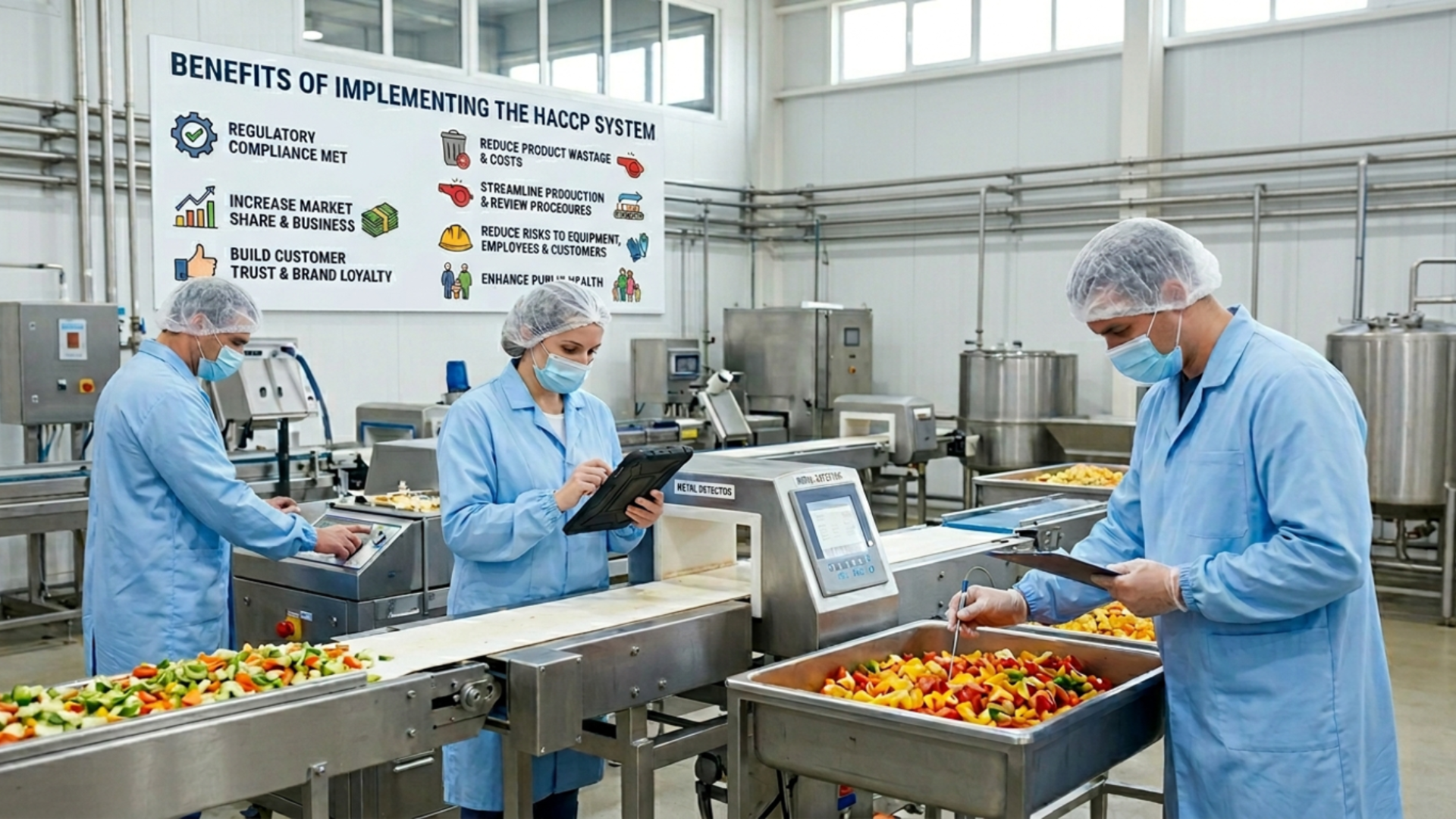
Benefits of HACCP in Food Safety
Maintaining proper and efficient food safety standards not only benefits your company but also its customers. Here are some of the advantages of implementing the HACCP system:
- Regulatory requirements will be met properly to produce products for distribution.
- Adhering to the HACCP system can help grow market share and increase business while helping access new markets.
- Increases customer trust and enhances brand loyalty.
- Reduces product wastage, which prevents unwanted costs.
- A proper HACCP plan reduces the chance of customer complaints and costly recalls.
- Production can be streamlined more efficiently by reviewing the facilities and procedures.
- A good HACCP plan cuts down the risks to equipment, employees, and customers.
- Maintaining strict practices enhances public health as well as increases trust in products.
Why is Choosing an Ideal HACCP Solution Important in Cold Rooms?
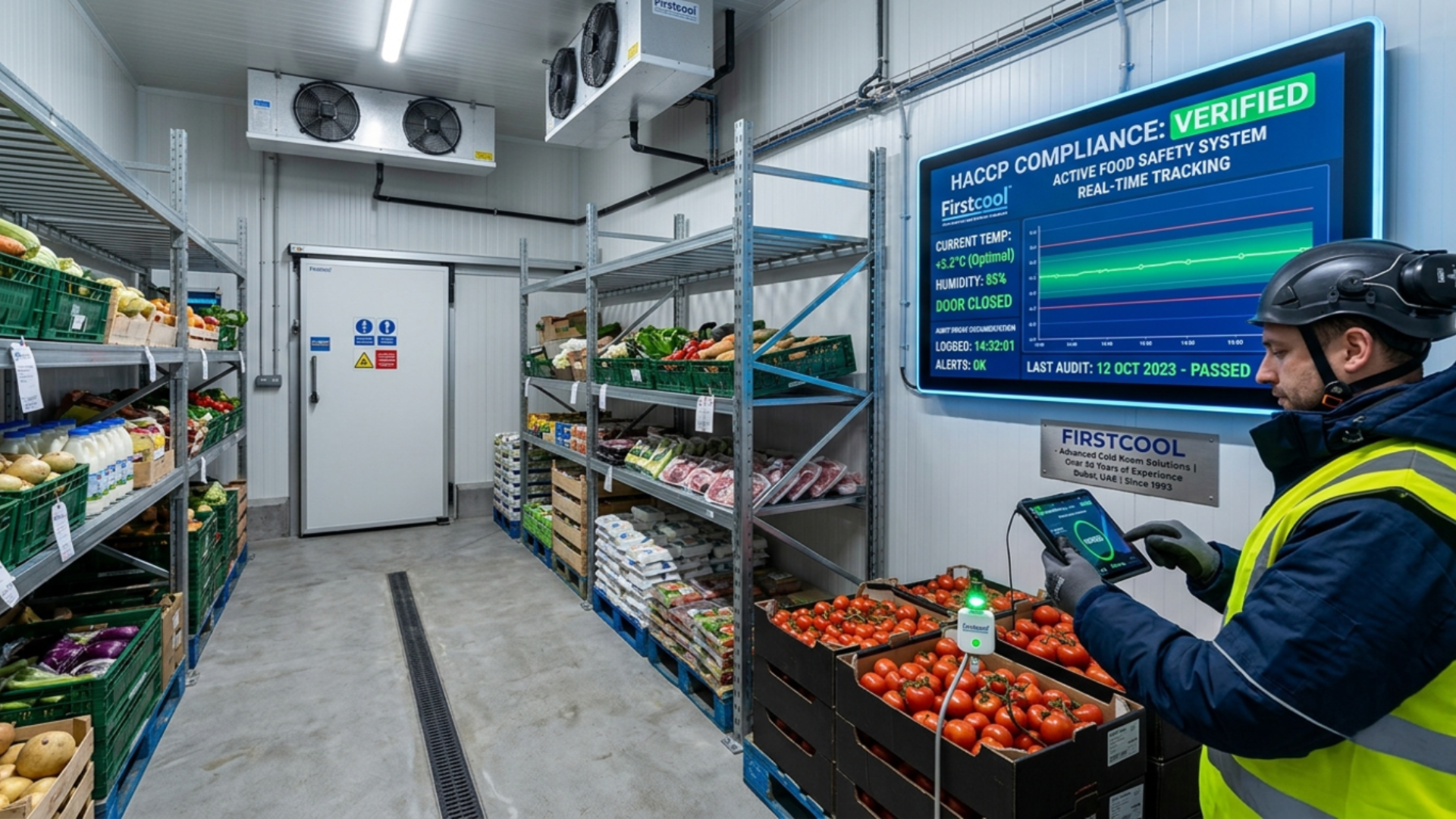
When dealing with any businesses related to food and safety, it is crucial to understand the importance of HACCP in cold rooms. This is because proper measures can help turn passive refrigeration into a safe, active, and verified food safety system. It ensures that the temperature stays controlled, thereby preventing any bacterial growth, food spoilage, and unwanted costs. Choosing an ideal HACCP solution is important as it guarantees automated compliance, audit-proof documentation, and real-time tracking, all of which help protect public health. As you may be familiar, there are many cold storage manufacturers in Dubai, UAE. One of the prominent among them is Firstcool, with over 30 years of experience. Firstcool is known for its high-quality cold room solutions that offer all sorts of services from manufacturing and installation to maintenance. Choosing them can ensure a long-lasting reliability and freshness of your products.
Conclusion
HACCP is a vital system that helps us control food safety rather than leaving it to chance. It helps us understand the potential chemical, physical, and biological hazards that can compromise the safety of the products. This system helps us focus on risks every step of the way, which ultimately protects customers, supports the team, and helps keep up the quality standards. Today, there are many solutions to choose from, which in a way is beneficial as well as confusing. Choosing the right HACCP solution for your cold rooms is critical to prevent food spoilage and protect public health. With HACCP, it becomes easier to focus on the preventative measures rather than relying on end-product testing. Among the many solutions available today, Firstcool seems to be a safe option to enhance your business while prioritising public health.
Frequently Asked Questions
Who needs to follow HACCP?
The HACCP system is primarily used by food manufacturers, processors, distributors, and service providers. It is especially important in high-risk sectors, such as ready-to-eat foods, meat, dairy, poultry, and seafood.
How does HACCP help prevent foodborne illnesses?
HACCP plays a critical role in preventing foodborne illnesses by controlling hazards and temperature while maintaining proper hygiene to stop bacteria from contaminating the food.
Is HACCP a legal requirement?
HACCP is legally required in many countries to meet food safety standards and to maintain best safety practices.
