Expansion Valve vs Capillary Tube: Which Is Better for Refrigeration Systems?
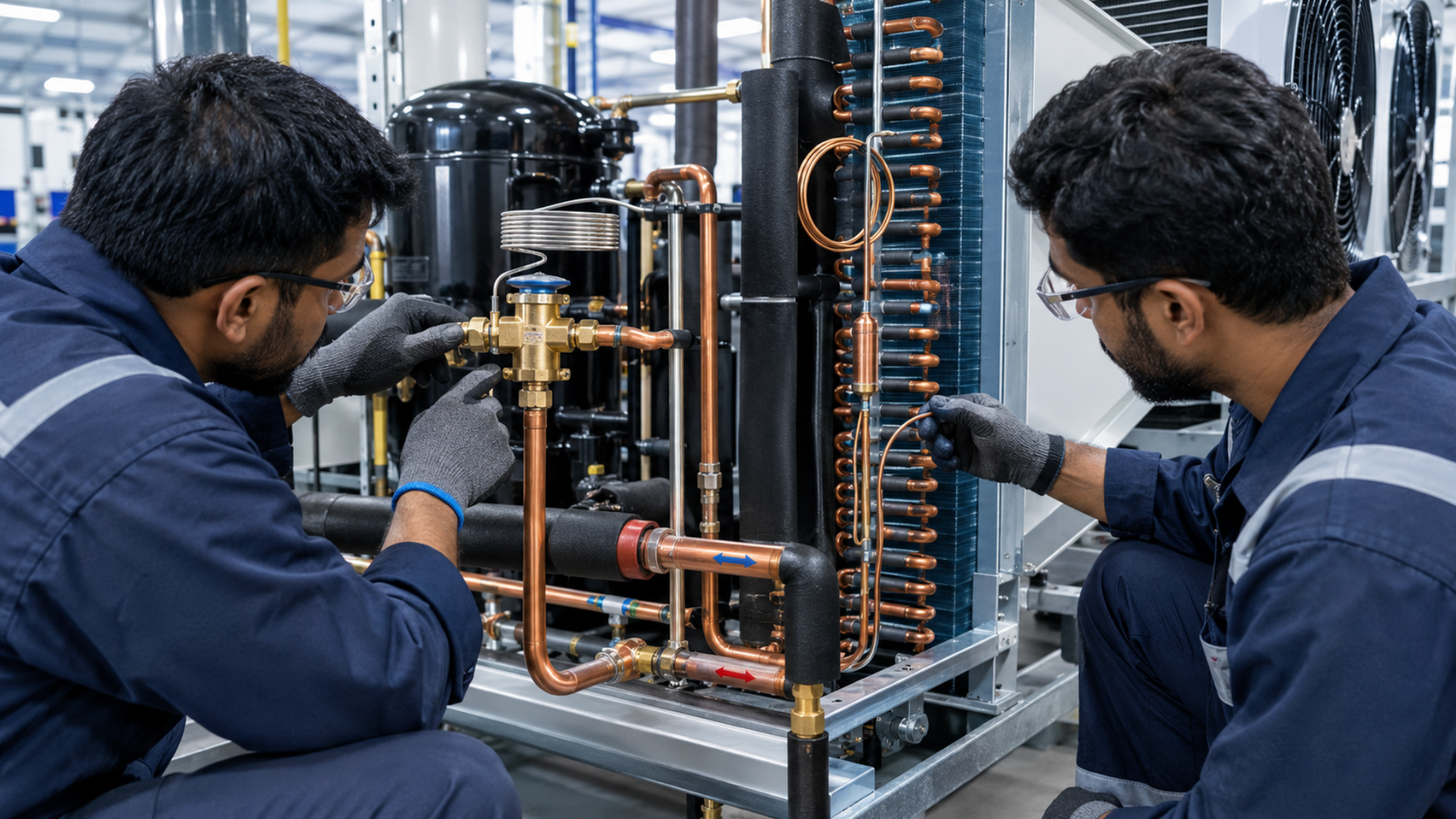
Before learning whether an expansion valve or capillary tube is better for refrigeration systems, it is important to learn what and how both of them work. In simpler terms, an expansion valve is a vital component in refrigeration systems that helps reduce refrigerant pressure. It controls the flow of liquid refrigerant into the evaporator and reduces its pressure from high to low. On the other hand, a capillary tube is a very thin copper tube that acts as an expansion and metering device, dropping pressure and regulating refrigerant flow.
Both the expansion valve and the capillary tube are essential in a refrigeration system, as they make it possible to drop the refrigerant’s pressure and temperature so it can absorb heat in the evaporator. This blog further discusses the difference between an expansion valve and a capillary tube to determine which is better for refrigeration systems. So, keep reading to learn more.
What is an Expansion Valve?
Controlling refrigerant flow in refrigeration systems is crucial for maintaining cooling capacity, cooling effect, and performance. This is where an expansion valve plays its role. Know that the design and performance of the expansion valve can directly impact a system’s performance and efficiency. As for how an expansion valve works, it transforms high-pressure, high-temperature liquid refrigerant into low-pressure, low-temperature vaporized refrigerant. This ensures the normal operation of the refrigeration system.
What is a Capillary Tube?
A capillary tube is a metering device commonly used in refrigeration systems to maintain temperature. It is installed between the condensing unit and the evaporator and is considered an essential part of the refrigeration system since it functions to control the flow of refrigerant. The main advantages of capillary tubes are that they are simple and cost-effective, meaning they don’t need any moving parts, making them affordable and easy to maintain. They also ensure a steady, controlled supply of fluids, and their small size makes them ideal for space-constrained applications.
Difference Between Expansion Valve and Capillary Tube:
The key difference between an expansion valve and a capillary tube is that the former has excellent load adaptability, as it adjusts to changing heat loads, but the latter only has fixed load adaptability, as it performs under stable, designed conditions. Regarding efficiency, the expansion valve has higher efficiency in variable-load or fluctuating ambient conditions, whereas the capillary tube is efficient in steady-load, compact systems with precise charges. Another main difference between them is cost and complexity. While the expansion valve is more expensive because it has moving parts and requires more installation care, the capillary tube is more affordable as it is simple, highly durable, and easy to replace.
Which is Better For Refrigeration Systems: Expansion Valve or Capillary Tube?
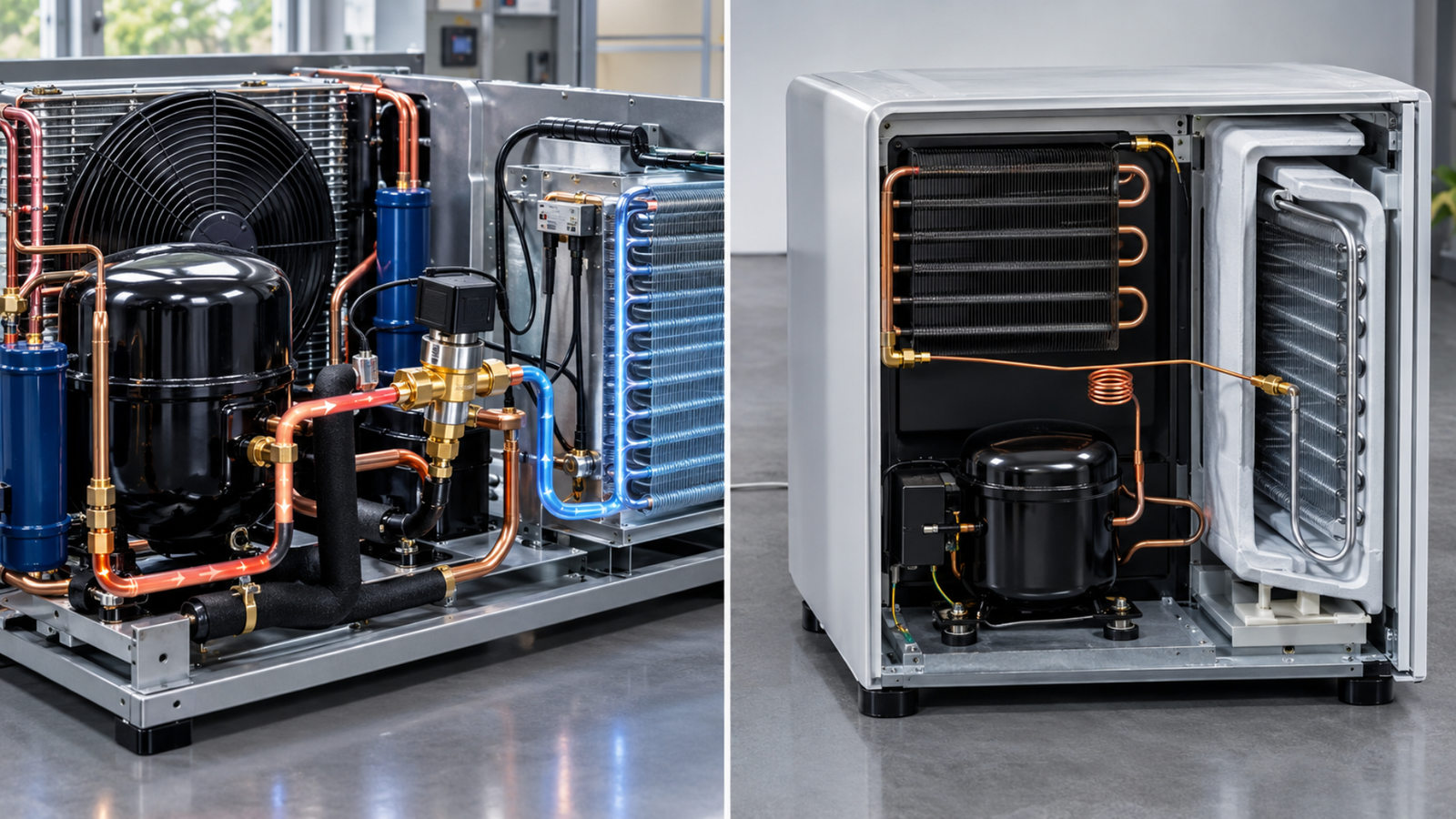
When choosing between an expansion valve and capillary tube, neither is universally better. The right choice depends solely on the system’s size, load variability, and cost requirements. The core difference is that the expansion valve is an electronic device with moving parts that actively adjusts refrigerant flow based on evaporator superheat. On the other hand, a capillary tube is a fixed-length, narrow-diameter copper tube that creates constant restriction with no moving parts.
You could choose an expansion valve if you are dealing with a larger system, frequent load fluctuations, variable compression speeds, or wide ambient temperature swings. However, you can choose a capillary tube if you are building or repairing a small, factory-sealed, low-capacity system, such as a domestic fridge or small water cooler. It is very helpful in operating conditions that remain steady and where cost-efficiency is a priority.
Why Choosing the Best Cold Room Services Matters
Choosing the best cold room services matters because the right services use the metering devices to determine your system’s efficiency, cooling speed, and temperature stability. Partnering with the ideal cold room services plays a key role since an inexperienced technician might install a cheap, incorrect component that causes frequent system breakdowns, shortens your compressors’ lifespan, or leads to high energy bills.
One of the leading cold room services in Dubai UAE, is Firstcool, with over 30 years of experience. Firstcool specialises in high-quality cold room solutions, offering services like manufacturing, installation, and maintenance of temperature-controlled storage systems. They are a team of professionals who provide tailored solutions that ensure efficiency, reliability, and long-term performance. So, if you’re looking for a reputable and experienced cool room service, Firstcool is a great choice.
Conclusion
Both the expansion valve and the capillary tube play a primary role in a refrigeration system, as they work to drop the pressure and temperature of the liquid refrigerant before it enters the evaporator. Choosing the right devices and services is crucial to get the best outcome. Understand that a cold room is a major financial investment, which is why hiring top-tier professionals is important.
Firstcool is a prominent cold room service that provides seamless solutions for the manufacturing, installation, and maintenance of commercial cold rooms and refrigeration systems across Dubai, UAE. Firstcool provides a wide range of high-quality products and services that are designed to meet the diverse needs of clients. Firstcool is a great choice if you’re looking for experienced and professional cold room services.
Frequently Asked Questions
What is the capillary tube used for?
A capillary tube is a very narrow, thin-walled pipe that is used to control fluid flow, measure tiny liquid samples, or regulate pressure across different systems.
Why do expansion valves fail?
An expansion valve often fails due to contamination, mechanical wear, or temperature sensor damage, leading to blockages or mismanagement of refrigerant flow.
Are a capillary tube and expansion valve the same?
No, they are not the same, even though both serve as expansion or metering devices in refrigeration or air conditioning systems to reduce refrigerant pressure.
