
Cold Storage Warehouse Requirements: A Practical Guide for Businesses
If your business involves any sort of perishable goods that require a temperature-controlled setting, cold storage facility is a necessity. Whether you deal with food products, pharmaceuticals, or any such products, understanding cold storage warehouse requirements is essential to ensure safety, protect quality, and meet safety standards.
A well-designed and properly functioning cold storage warehouse ensures smooth and safe operations in businesses without spoilage. Let us dive deep into more details about cold storage warehouse requirements and what business owners should know about them. Know more about Cold Storage Warehouse Requirements in this blog.
Understanding cold storage warehouse requirements
Every product has its own tolerance to temperature. Fresh produce, frozen meat, vaccines, and special chemicals all have different requirements. That is the reason cold storage warehouse requirements go beyond the installation of refrigeration units.
Some of the key requirements are as follows:
- Accurate temperature control systems
- Accurate insulation and vapor barrier
- Energy-efficient refrigeration systems
- Backup power
- Monitoring and alarm systems
- Hygienic flooring and wall linings
- Regulatory compliance
These are the key requirements that should be in place to ensure that the cold storage warehouse can deliver the desired results.
Infrastructure needs for cold storage warehouse
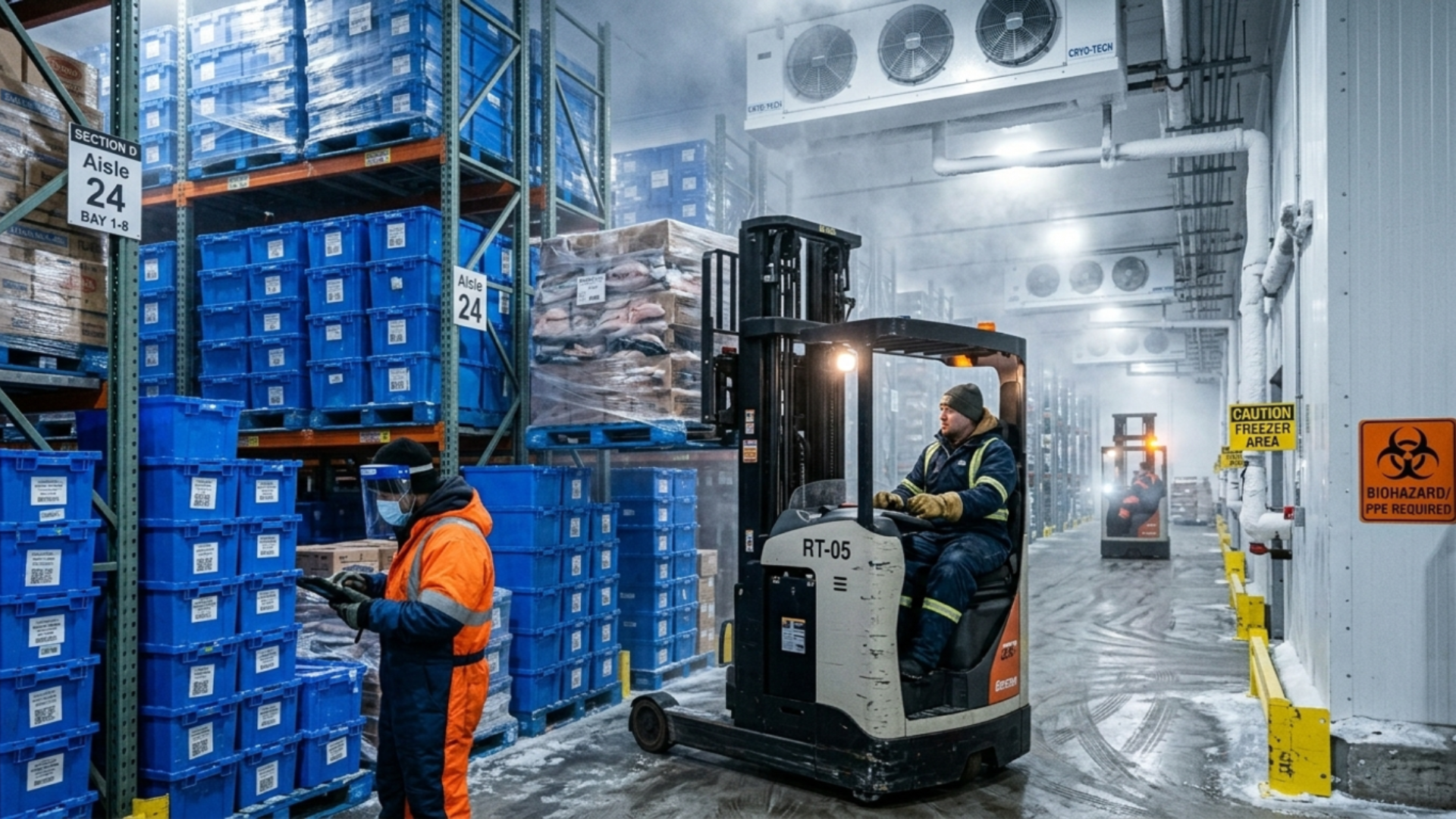
A cold storage warehouse should always be constructed with durability and insulation in mind. Temperature changes can cause product damage and condensation problems.
Some of the important factors to consider in the construction of the cold storage warehouse include:
- High-quality insulation materials to prevent heat transfer
- Sealed doors with air curtains to prevent temperature loss
- Non-slip and moisture-resistant floors
- Drainage systems to prevent water accumulation
- Racking systems to provide circulation for the airflow
The design should also provide the smooth circulation of goods with temperature stability.
Cold storage and warehouse layout planning
Designing a proper layout that aligns with the space availability and product nature is critical in cold storage and warehouse layout planning. We also need to divide the area into different zones as per temperature, like:
- Chilled storage (0°C to 5°C)
- Frozen storage (-18°C or lower)
- Blast freezing areas
- Loading and unloading docks with temperature buffers
The loading and unloading docks prevent hot air from entering the warehouse during transfers, reducing strain on refrigeration systems. A perfect cold room warehouse design offers better organization, operation, and efficiency.
Temperature monitoring in a cold storage facility
Temperature monitoring is the heart of a cold storage facility. Cold storage warehouses must use certain systems to monitor temperature. Modern cold storage facilities use:
- Digital temperature sensors
- Automatic alert systems
- Remote monitoring
- Data loggers
These systems notify any temperature fluctuations or issues that can spoil the products. Such facilities are mandatory to keep track of how temperature works and do necessary actions on time.
Safety regulations in cold warehouse storage
Safety regulations and compliance are some of the most important cold storage warehouse requirements. Cold warehouse storage must meet food safety and industrial standards based on the sector. A cold storage must ensure:
- Compliance with local food safety regulations
- Proper and timely equipment maintenance
- Pest control facilities
- Sanitation protocols
- Well-trained staff
Employees working inside a cold room warehouse must be provided with safety gear like thermal clothing and gloves. Sticking to safety and compliance regulations preserves your products and creates a safe working environment at the same time.
Energy efficiency and sustainability
Energy consumption is one of the largest operational costs in a cold storage warehouse. Less energy-consuming and efficient systems are critical factors among cold storage warehouse requirements.
Energy-saving strategies include:
- Variable-speed compressors
- LED lighting with motion sensors
- High-speed insulated doors
- Solar energy integration
- Regular maintenance to prevent refrigerant leaks
A well-maintained cold storage facility reduces energy consumption, thus reducing energy costs. These strategies also support environmental responsibility.
Conclusion
Knowing cold storage warehouse requirements is not all about installing cooling equipment. It includes many processes like infrastructure designing, energy efficiency, safety compliance, temperature regulations, and more.
An efficient cold storage facility not only keeps your goods in quality and freshness but also improves the customer’s trust and reliability in your brand.A cold room warehouse ensures that your product is safe to use, resulting in brand worthiness and profitability.
At Firstcool, we specialize in providing premium cold storage facilities, designed for your needs and products. Contact us now for more details.
Ready to Build a Reliable Cold Storage Solution? Connect with Firstcool for cold storage warehouse solutions that meet all requirements.
Frequently Asked Questions
What is the temperature range in a cold storage warehouse?
It depends on the product. Usually the temperature range is 0°C to 5°C for chilled products, while frozen products are kept at -18°C or lower.
Why is monitoring important for a cold storage facility?
Timely monitoring ensures smooth functioning, prevents temperature fluctuations, and maintains efficiency.
Is a backup generator mandatory for a cold room warehouse?
Yes, backup power is critical to tackle unexpected power outages.
How to reduce energy costs in a cold warehouse storage?
Use energy-efficient compressors, insulated doors, and conduct timely maintenance.
What are the basic cold storage warehouse requirements?
The basic requirements include temperature control systems, insulation, monitoring equipment, backup power, proper flooring, and safety regulations.
